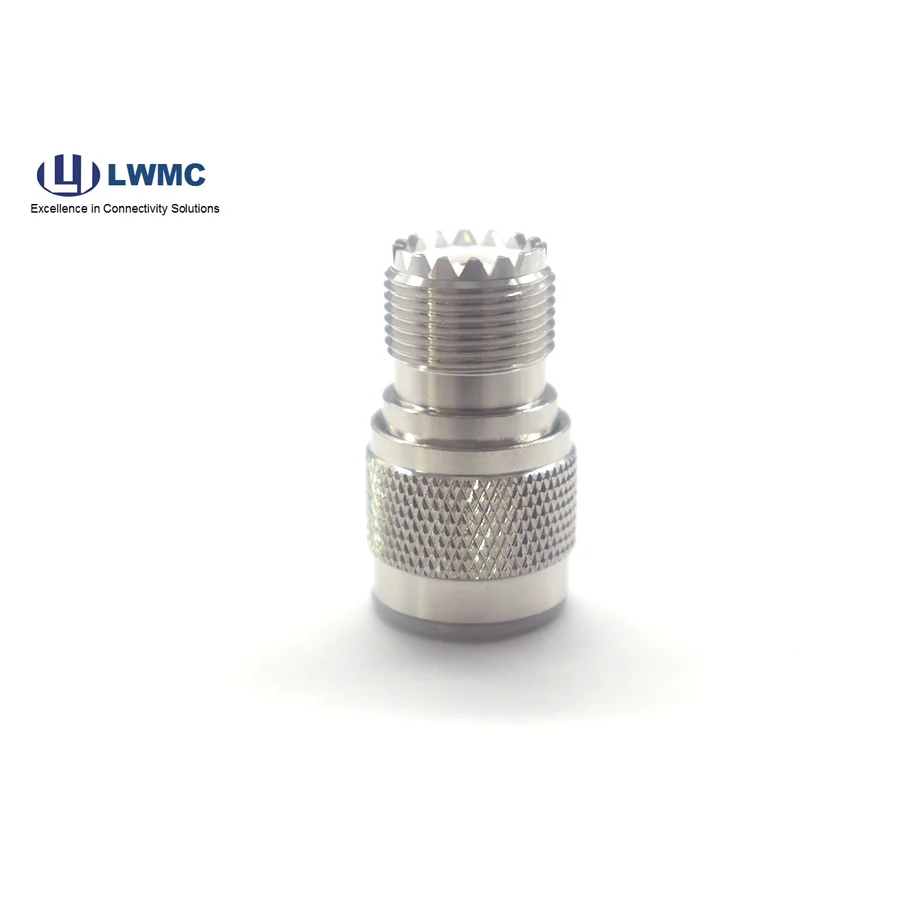
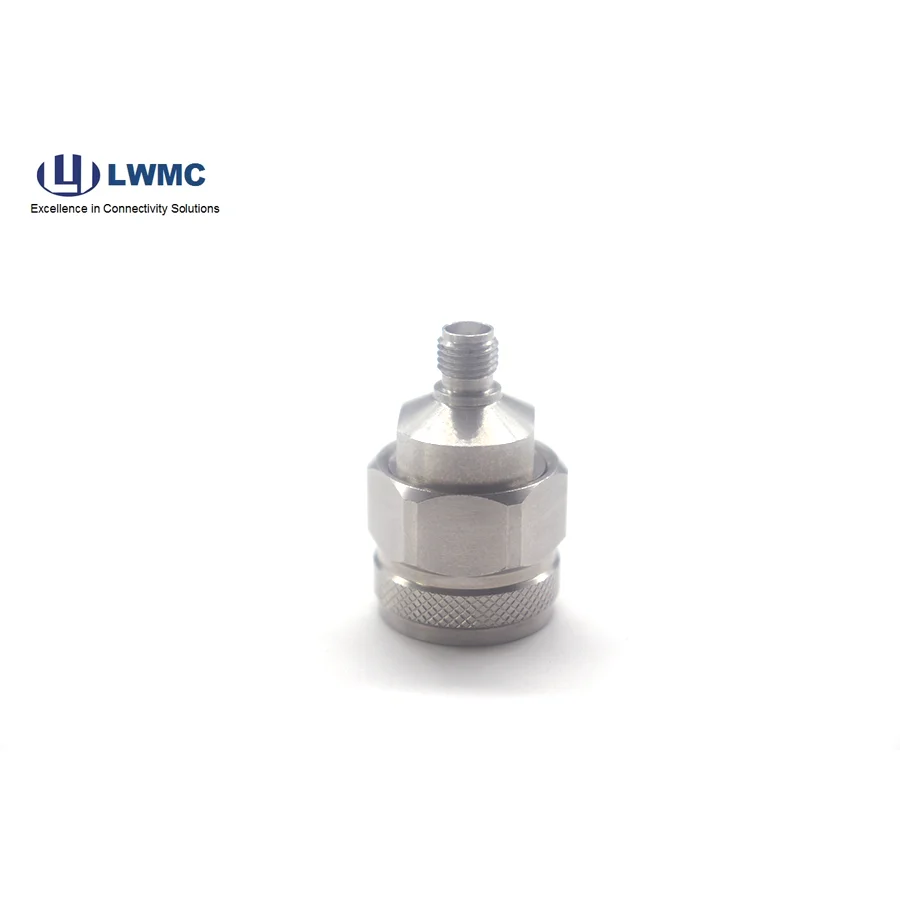
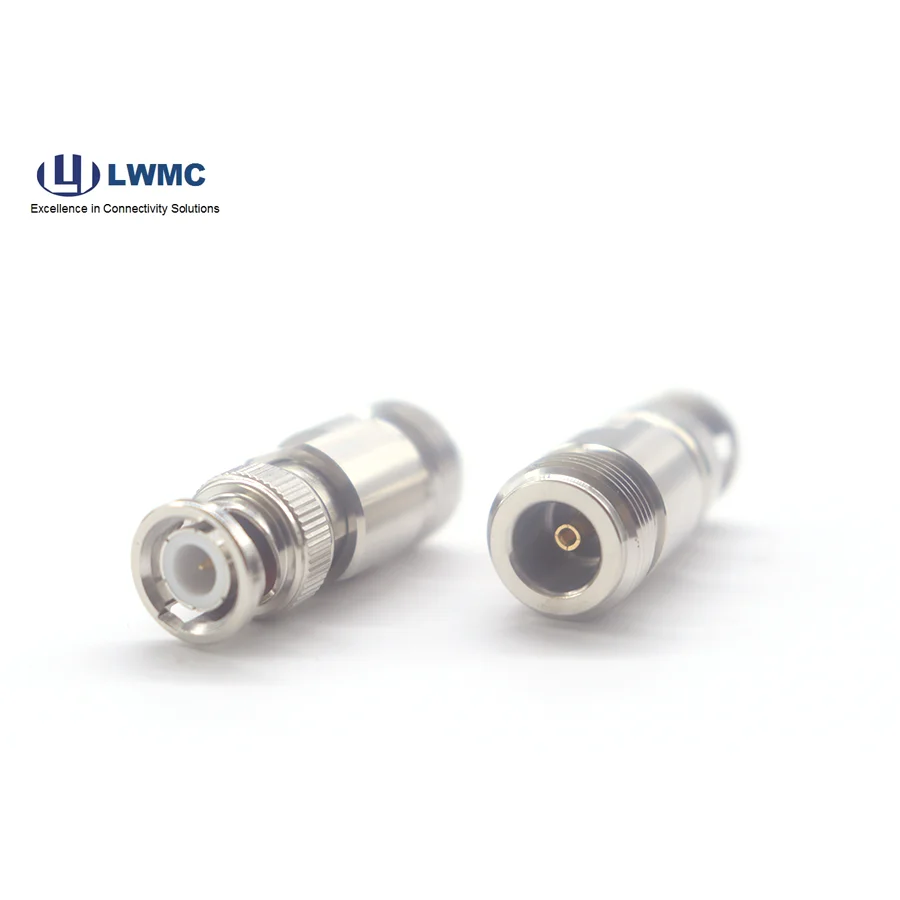
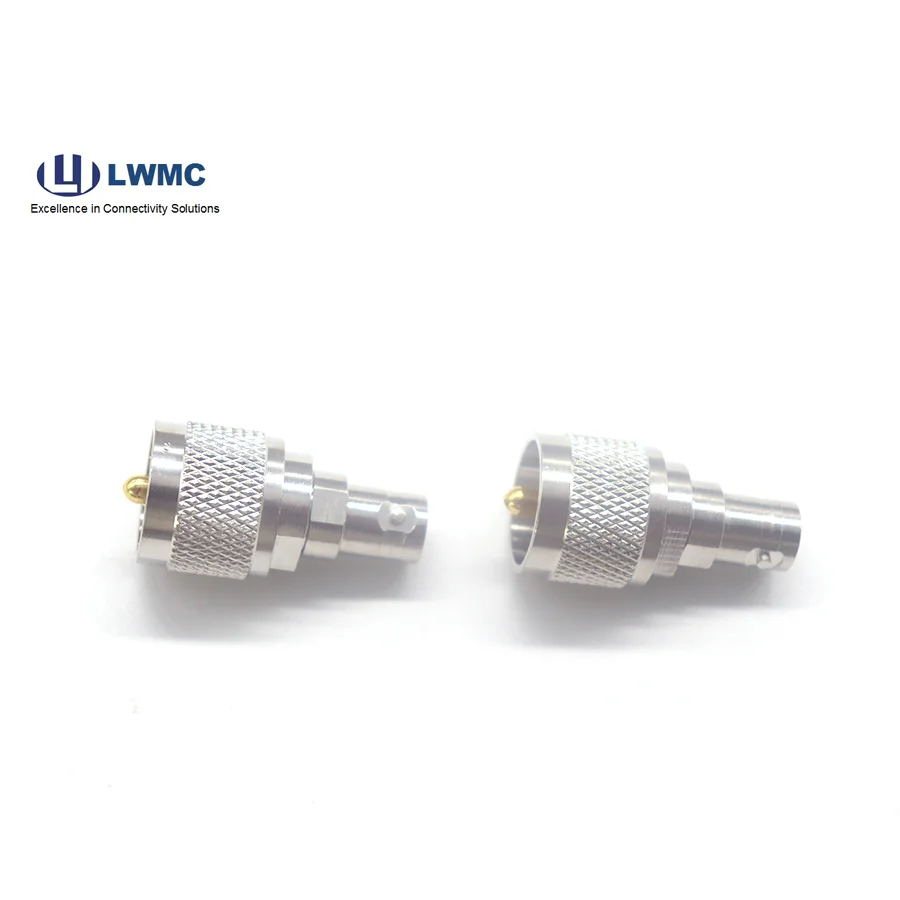
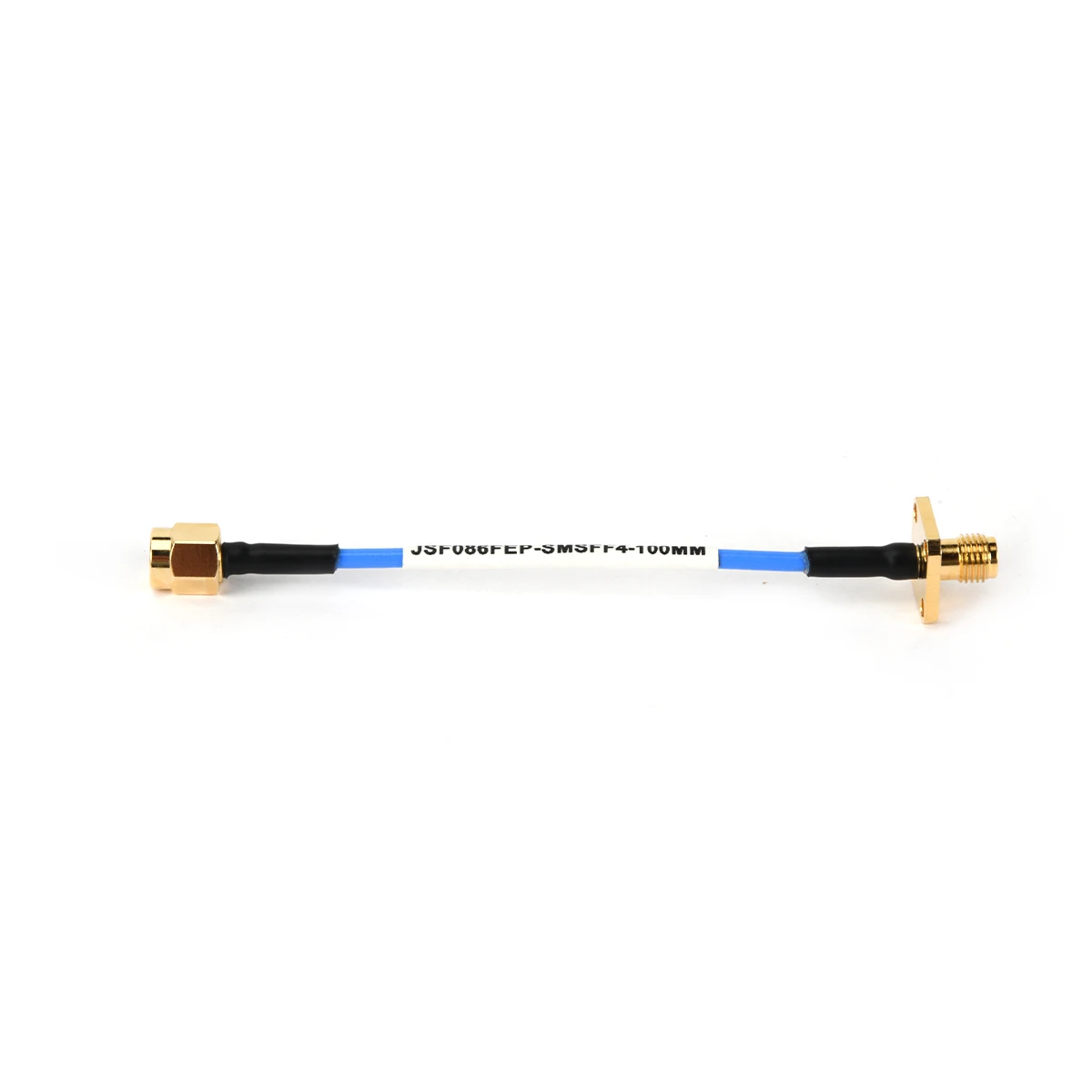
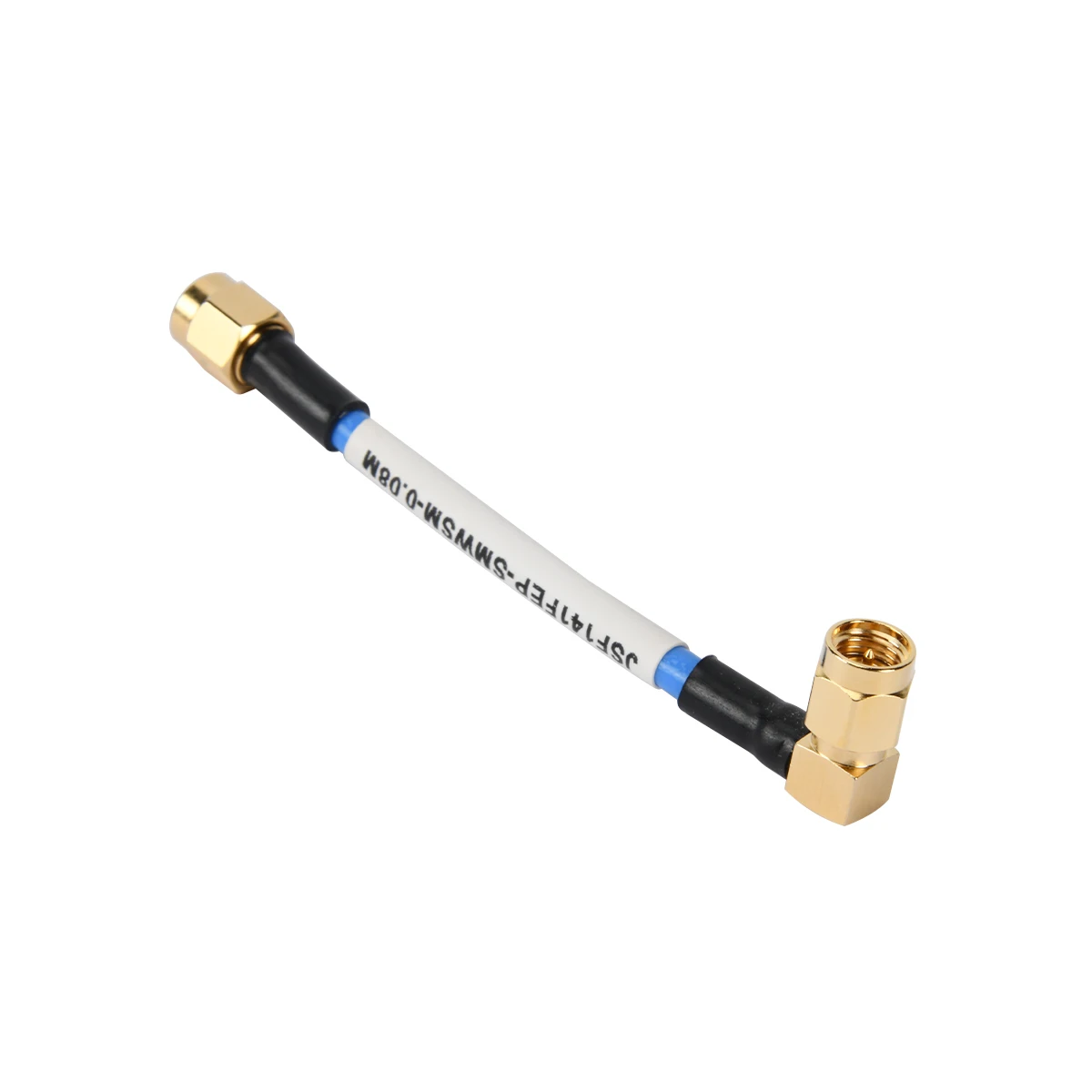
In mission-critical industrial environments—from aerospace systems to oil exploration—reliable RF connections are non-negotiable. Zhenjiang Linkworld Microwave Communication Co., Ltd. leverages over 20 years of RF innovation to deliver male plug adapters that combine precision engineering with rugged durability. Designed to perform under extreme conditions, our adapters ensure signal integrity, mechanical stability, and long-term reliability across the most demanding industrial scenarios.
Linkworld’s male plug adapters are engineered to support frequencies up to 67 GHz, with voltage standing wave ratio (VSWR) as low as 1.10 and passive intermodulation (PIM) down to -168 dBc. These specifications are critical in applications such as satellite communications, radar systems, and test instrumentation, where signal distortion must be minimized. Manufactured in compliance with IEC60169 standards, our adapters deliver consistent performance even in high-bandwidth, high-vibration environments.
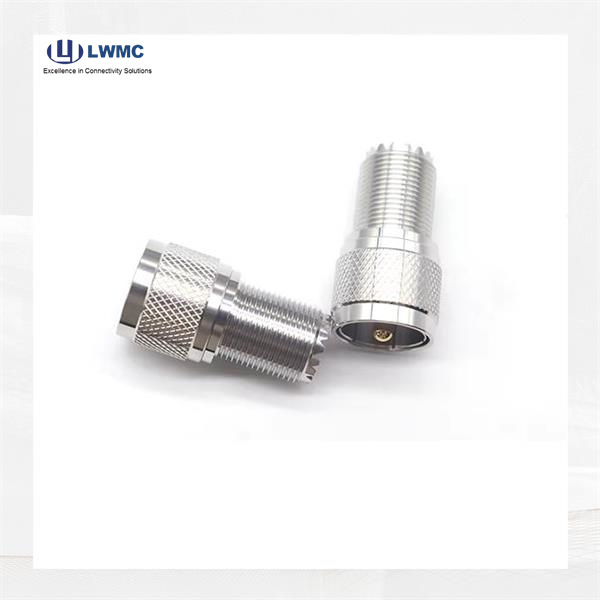
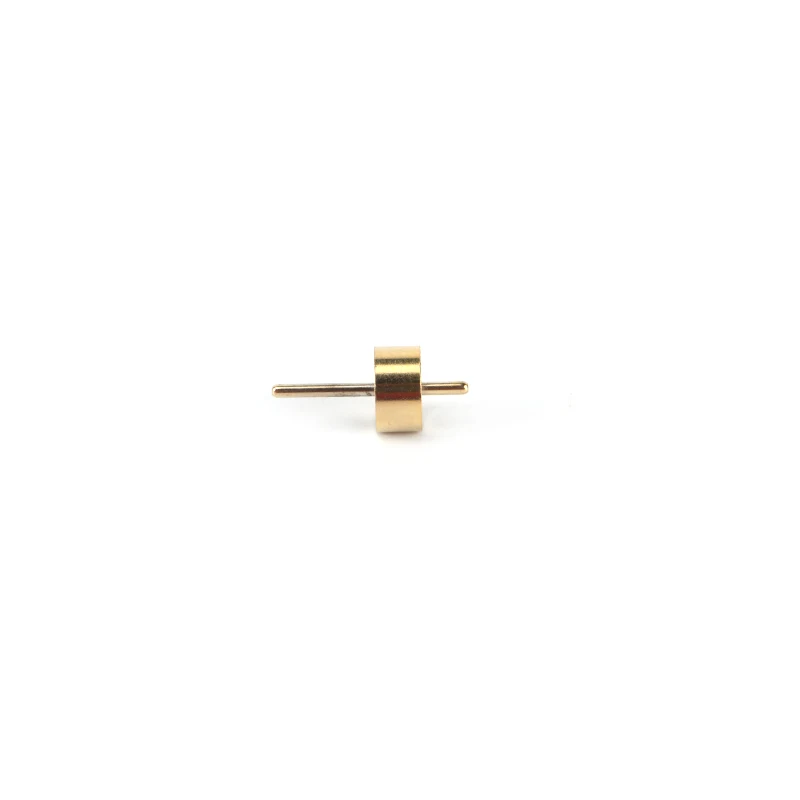
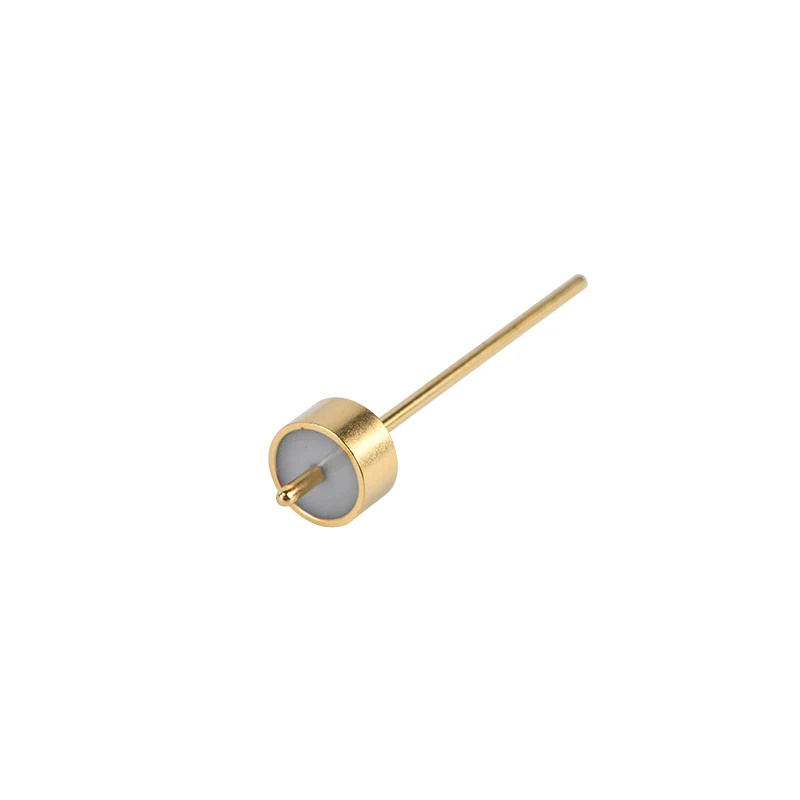
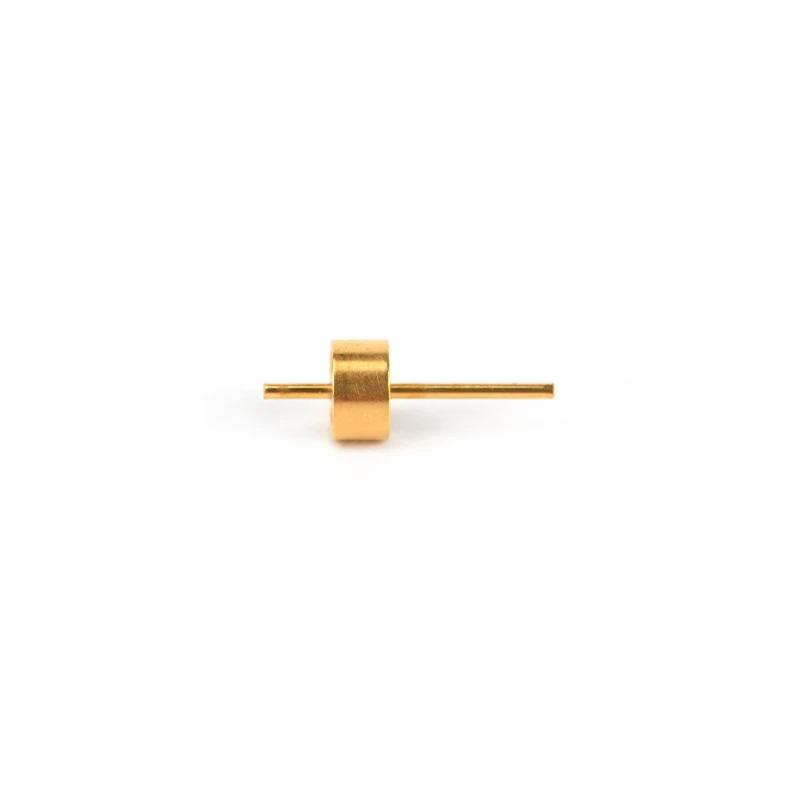
Industrial applications often involve harsh operating environments, including wide temperature ranges, mechanical shock, and continuous mating cycles. Linkworld’s male plug adapters are rated for over 500 mating cycles, with robust construction that maintains performance under stress. For specialized needs, our glass-seal series supports operation at temperatures up to 350°C, providing hermetic sealing for microwave devices in aerospace, military, and oil exploration equipment—where failure is not an option.
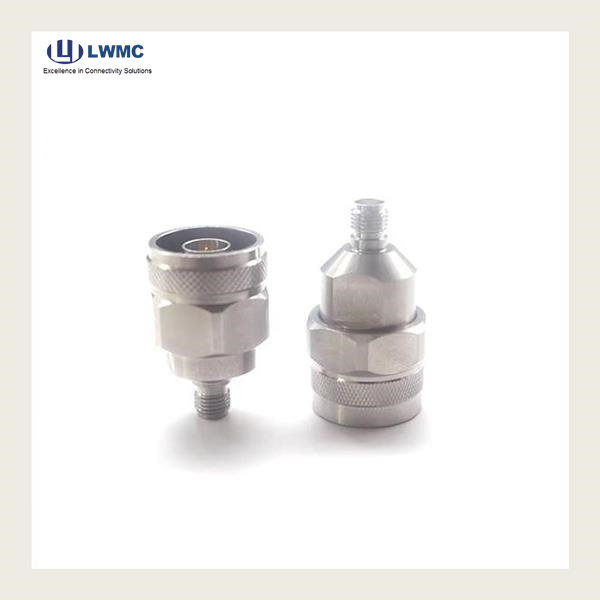
Unlike standard off-the-shelf components, Linkworld works closely with clients from the initial design phase to deliver customized male plug adapter solutions tailored to specific industrial requirements. Whether integrating with semi-rigid, flexible, or semi-flexible cable assemblies, our adapters are optimized for both high-frequency stability and ease of integration. With a 25-year experienced R&D team, we provide end-to-end support—from design optimization to post-sales tracking—ensuring seamless deployment in complex systems.
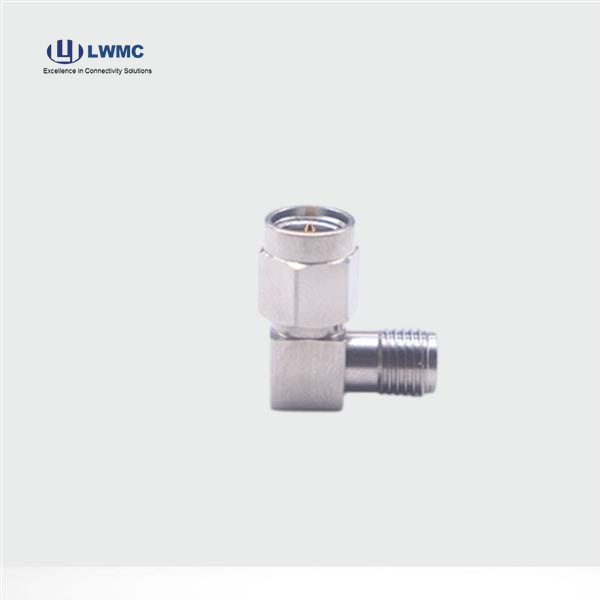
Linkworld’s male plug adapters are trusted in sectors where precision and durability are paramount. Key applications include military and aerospace platforms, telecommunications infrastructure, test and measurement instrumentation, and medical equipment. Our commitment to “Honesty and Perfection” underpins every product, ensuring that industrial clients receive high-reliability components backed by rigorous quality control and responsive service—enabling success in global markets.

 EN
EN