
 EN
EN
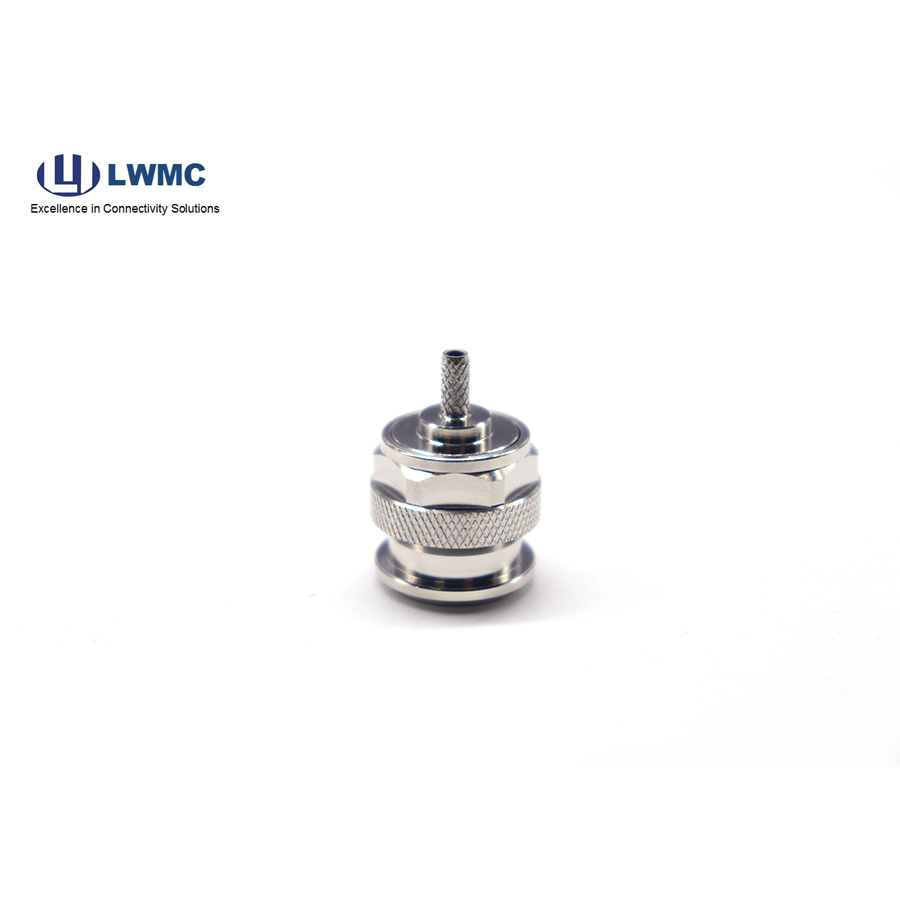
Signal integrity is all in the high-frequency RF and microwave systems. The error margin reduces significantly as frequencies move to millimeter-wave application, such as 5G, radar, and modern telecommunications. The connector of a bad choice or a simple assembly defect may turn a clean signal into a tangle of reflections, insertion loss and data corruption. We have more than 20 years of RF innovation experience at Linkworld, and we know that preservation of signal integrity involves the process of RF signal integrity holistically, that is, we look at the choice of material, accuracy with which material is manufactured. The present blog provides four important measures that must be taken in the high-frequency coaxial connector systems to maintain signal fidelity.
Master Impedance Matching and Controlled Transition
Consistent characteristic impedance, usually 50 Ohms, is the basis of signal integrity in any coaxial system. Any non-conformity to this standard introduces an impedance discontinuity resulting in signal reflections that reduce performance and raise Voltage Standing Wave Ratio (VSWR) .
In high-frequency systems the most vulnerable areas are the transition points (where the connector meets the cable) or center conductor meets pin top dielectric. Connectors need to have very narrow geometric tolerances to achieve integrity. The dielectric should be a uniform dielectric (usually PTFE, or proprietary composites) and the center conductor should be centred. The RF connectors of Linkworld are designed in such a way that they achieve a smooth impedance continuity between cable and connector and reduce reflections and make the signal go through the interface as though it was an extension of a transmission line.
Minimize Insertion Loss Through Material and Plating
Possibly the most important reality is insertion loss which is the attenuation of the signal as it passes through the connector, but this can be controlled. The so-called skin effect causes current flow to only be concentrated on the very surface of the conductor at high frequencies. Accordingly, loss performance is determined by the surface material of the center conductor and the outer body directly.
Materials that are highly conductive are required. The conduction and spring retention required are offered by using beryllium copper or phosphor bronze which are plated with high quality finishes. Gold plating can provide much better corrosion and surface conductivity to smaller connectors such as SMA, whereas silver plating, although prone to oxidation, offers the lowest surface resistance of any surface conductivity by far in high-power use. We have plating thicknesses and materials at Linkworld that we very carefully choose to guarantee our connecters and cable assemblies provide signals with the least attenuation, even at the frequency limits of the interface.
Ensure Robust Mechanical Stability and Vibration Resistance
Signal integrity is not entirely an electrical parameter but it has a strong foundation in mechanics. Even on a microscopic scale such motion between the center conductor and the dielectric may lead to intermittent connections and phase noise in high-frequency systems. This is especially essential with mobile systems such as aerospace, automotive radar or even infrastructure that is susceptible to wind related vibrations.
At high frequencies, threaded interfaces (like those on SMA and N-type connectors) are much more mechanically stable than bayonet-style connectors. The unvarying mating force makes the surfaces of contact stay at pressure to avoid micro-displacements. A loose fit brings about a "fretting effect" which produces passive intermodulation (PIM) and instability. The design approach of Linkworld emphasizes excellent contact geometry to make sure that after mating, the connection is electrically transparent despite any environmental strain.
Optimize Cable Assembly and Termination Techniques
An ideal connector will not work when it is poorly assembled to the cable. Signal integrity is commonly lost in the process of cable assembly. Any wrong strip length, nicked braids or wrongly soldered center conductors will result in instant performance degradation.
Precision is the most important aspect of high-frequency assemblies. The crimp style must fit the cable precisely in order to preserve the 50-Ohm characteristic impedance across the connector back end. In phase-sensitive applications, soldered connections can be the most stable and reliable. Linkworld is specialized in pre-manufactured coaxial cable assemblies which do not require any guesswork. With the combination of our connectors and high quality cabling with factory controlled processes we guarantee that the complete assembly, connector tip to cable end, maintains signal integrity between the transmitter and the antenna.
Signal integrity in high-frequency RF systems can only be ensured with a careful attention to the control of impedance, material science, mechanical design, and assembly precision. These factors are more and more interdependent as the frequencies are increasing. We offer end-to-end support and customized RF solutions to assist you in overcoming these obstacles at Linkworld, and we can offer the signal integrity that is needed with the high-frequency demands of the present day.