
 EN
EN
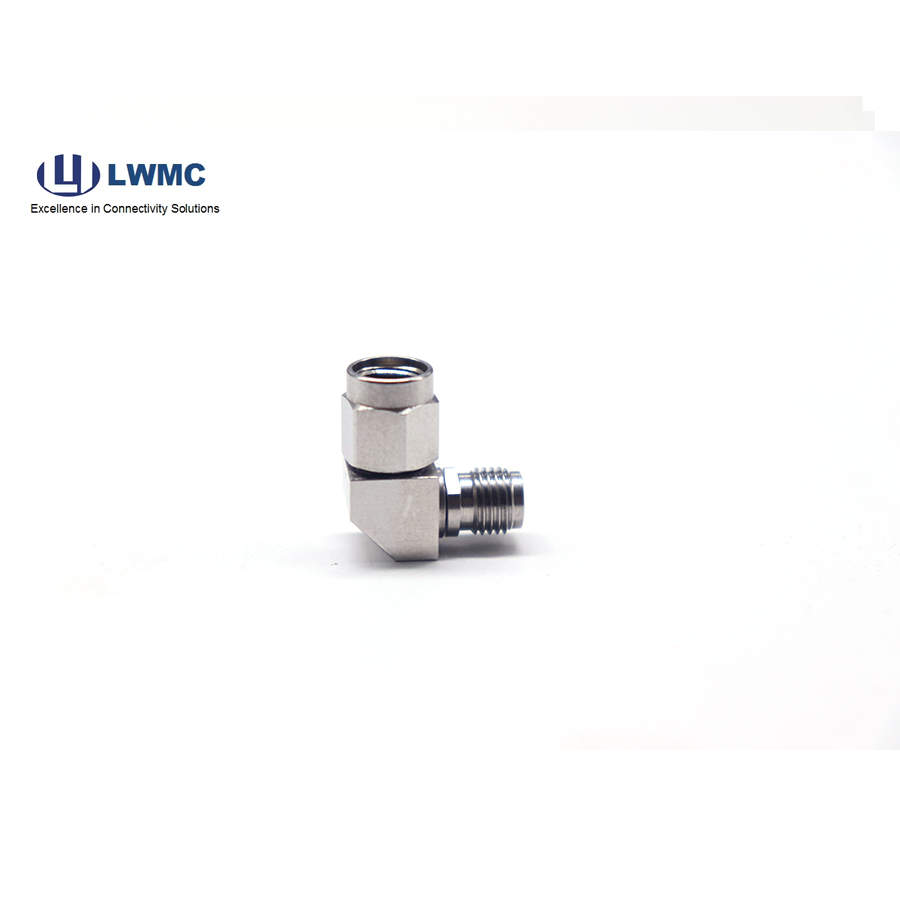
One of the largest challenges in RF industry today is to maintain high-frequency performance within increasingly small physical areas. The need to be smaller, lighter and more efficient coaxial connectors, drone delivery robots, small handheld devices, high density phased array antennas and as never before, the need to be smaller has challenged the utility of these components. Another engineering requirement is miniaturization whereby the new engineering solutions must maintain electrical performance, mechanical integrity, and reliability at miniature packages. Our company is Linkworld and we are a 20-year old RF manufacturer of miniature connector solutions and it is based on the new age applications challenges. In this paper, the researcher will assess some of the major trends that influence the miniaturization of the connectors and how it impact the design of the RF systems.
The Driving Forces Behind Miniaturization
There are several market trends which accelerate the reducing size of RF connectors. Wearable and portable technology demands components with minimal board space and negligible weight. In telecommunication, 5G massive MIMO antennas, dozens of elements are being conducted into one panel, the standard connectors cannot be inserted between tightly spaced elements. Aerospace and defense industry is increasingly turning to UAVs, miniaturized satellite systems whereby each gram counts. Such applications require connectors that offer good performance without necessarily compromising the size, weight, power and cost (SWaP-C) constraints. Linkworld works with its customers in development of a solution that is a special connector to a specific miniaturization problem, without loss in the required RF performance.
Key Miniature Connector Families and Their Capabilities
The industry has responded by presenting a number of standard connector families. SMP and SMPM series are excellent to 40 GHz and 65 GHz respectively and blind-mate interfaces are excellent to be used in assembling boards to boards connection in congested assemblies. MCX and MMCX are inexpensive with reliable performance up to 6 GHz, and packages that are significantly smaller than SMA connectors, coupled by snapping is space- and time-saving, as well. The thinnest series join the millimeter-wave spectrum of frequencies (110 GHz to and including 110 GHz) to meet the maximum space-saving requirements. Each family is associated with a trade off of the reduction of size and the electric ability. The range of products that can be found at Linkworld also has miniature styles of connectors and this allows the engineers to make the most suitable selections regarding interfaces depending on the frequency, space as well as mechanical requirements.
Engineering Challenges in Miniature Connector Design
It is not easy to downsize and perform well. As the physical dimensions reduce, production tolerances are becoming smaller and smaller, any micrometer variation can cause significant changes to impedance matching and VSWR. Also of concern is the selection of dielectric materials; there must not be variable properties of the insulating materials, they must be thin enough to be fitted within a smaller area. Contact reliability is another problem, smaller center conductors must maintain enough contact force despite hundreds of mating cycles despite having a smaller cross-section. Smaller conductors are more difficult to deal with when it comes to heat due to the fact that they are less massive to dissipate heat. The only way in which such challenges can be surmounted is precision manufacturing, high-end materials and novelty in contact geometries make Linkworld overcome such challenges so that miniature connectors have the same reliability and performance as their larger counterparts.
Integration Trends: Cable Assemblies and PCB Launch Design
Miniaturization is not only restricted to the connector but has also been extended to the entire interconnection system. The change in miniature connector (to printed circuit boards) will require particular attention in interface design to stabilise impedance across the transition. Miniature connector cable assemblies require precision termination procedures to preserve signal integrity. The cables too are smaller and nimbler with special dielectric material continuing to match the downsizing. The incorporation of connectors into the system packaging is a new trend and the custom interface designs do not need bulkheads mounts. Linkworld specializes in cable assemblies, which are custom made and they also provide engineering services to their customer PCB launch design to make sure that the customers maximize the entire signal path. The combined effort will ensure that miniaturization will not interfere with the operations of the systems.
Reduction in the size of the connector is also amongst the most significant trends currently defining the RF engineering. As the systems become smaller when used in lighter applications and requirements become smaller and lighter, connectors also need to be developed. The industry has responded to the demand for smaller form factors, whether through standardized families like SMP and MCX or totally tailor made integration solutions. Linkworld has more than 20 years of RF products and a commitment to be innovative which has enabled the miniature connectors, adapters and cable assemblies that would allow next generation RF systems to be achieved with high performance and miniature in nature. Work with us, and you will have the new miniaturization technology to play with your designs.