
 EN
EN
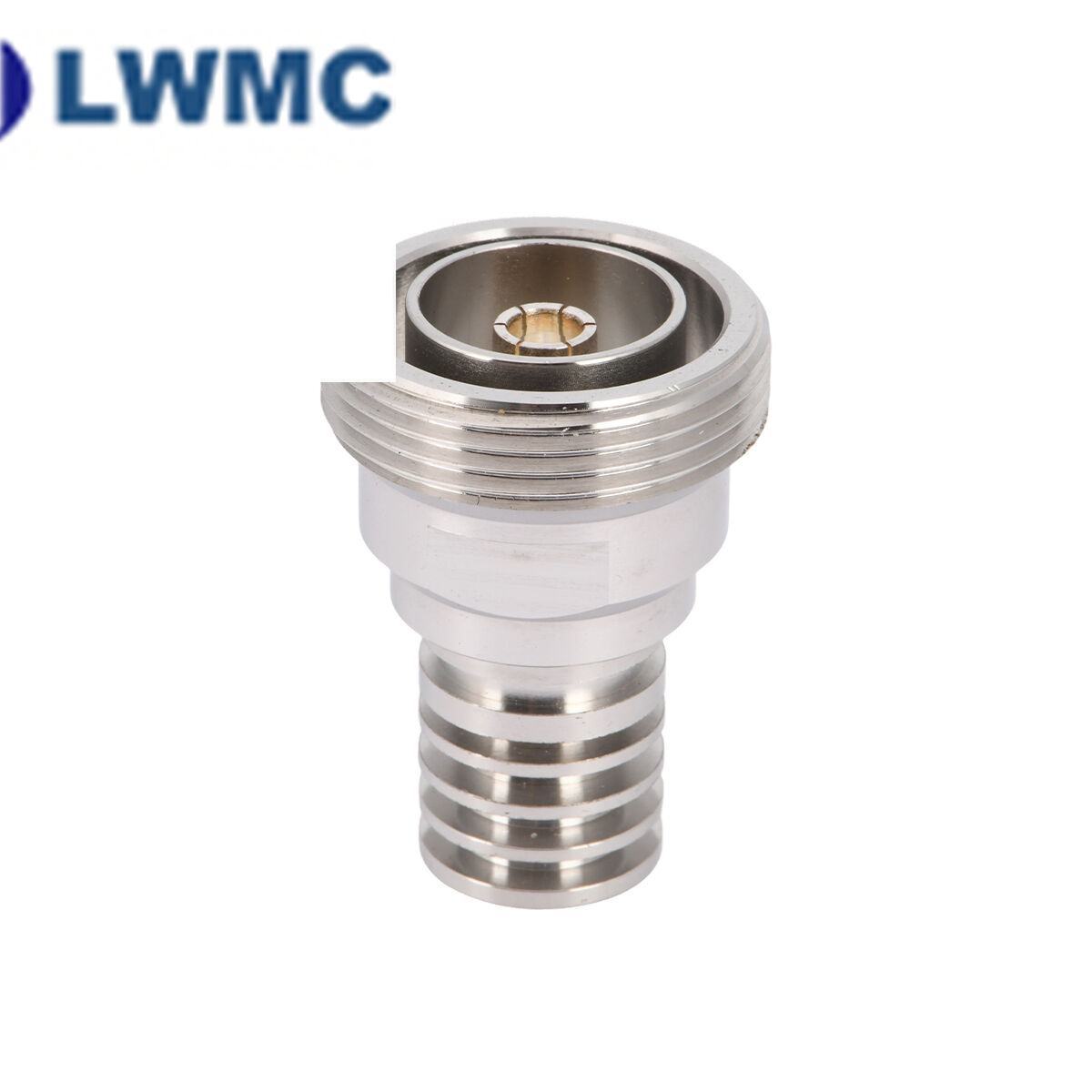
The design of microwave systems includes a basic issue in the design of passive devices used as filters, couplers, dividers, attenuators, and terminations: continuity of impedance between the different components. VSWR measures the effectiveness of these components. The poor VSWR is a waste of signal power, it reduces the noise figure and may damage active components in high power devices. In the 20 years of RF experience we have had in the industry, we realize that optimization of VSWR needs to be taken care of at all levels of integration. This guide discusses four key VSWR performance strategies.
Understanding VSWR Fundamentals in Multi-Component Systems
VSWR is a measure of impedance that is similar in transmission lines. When a signal encounters an impedance discontinuity at any interface then a portion of the signal will be reflected back toward the source forming standing waves that result in less power transfer efficiency. The correlation among VSWR and reflected power is exponential: VSWR of 1.5:1 corresponds to the reflected power of 4 percent and VSWR of 2:1 corresponds to the reflected power of 11 percent. In multi-component systems, reflections scatter and interact vectorially due to their sizes and electrical separation in-phase reflections sum, which also has the potential to increase VSWR contribution. One of the dominant causes of microwave poor performance is the impendence mismatch; as much as 40 percent of the transmitted power may be wasted in a mismatched system. The reflection of a typical 50Ω line on a mismatched component may be 30 percent or more of the signal. Even 10% of mismatch in high power devices such as 5G base stations can shorten the life of components by 15-20%. Linkworld assists customers in knowing these fundamentals to have good VSWR optimization.
Precision Interface Design and Connector Selection
The most important points of control of VSWR are connector interfaces. Minute dimensional discontinuities form large impedance discontinuities. SMA connectors have a current bandwidth of up to 18 GHz, but fall out quickly when the center pin separation is more than 0.1 mm, with a 0.2 increase in VSWR coming with every 0.05 mm of misalignment. Connectors for frequencies above 18 GHz (2.92mm K-type, or 3.5mm) are required, however mixing them with SMA may introduce 0.5 mm misalignment, and VSWR may increase to 3:1. Compared to push-on connectors, threaded connectors such as N-type are more resistant to vibration and their fluctuation is less than 0.1 dB at acceleration of 5 G. The connector-to-cable connector is also very important--VSWR nulls that are not 1.0:1 are usually the symptom of high-resistance contacts, bad solder, or an impedance mismatch due to the use of incorrect dielectrics. Precision connectors of Linkworld have strict tolerance and stable plating so that interfaces are not the weakest link.
Component-Level Matching Techniques
Even passive components are to be matched correctly. Energy transfer only gets worse when input terminal configuration is more than λ/8. This is met by advanced components, with integrated matching networks, which have VSWR as low as 1.05:1 within 10% bandwidth, a factor of 1.25:1 with more standard terminations. To enhance bandwidth, quarter-wave transformers minimize the mismatch to less than 5% narrowband use, whereas the two-section transformers keep matching at 500 MHz or above. The components of Linkworld reflect these similar considerations and when special assemblies are needed these corresponding networks can be added.
System-Level Integration and Measurement Verification
Low component-level VSWR does not ensure system performance. Component to component, component to cable and component to installation environment interactions affect the final VSWR. The composite VSWR is the result of the vector sum of reflections from all interfaces. In short assemblies, VSWR vs. frequency can be seen to exhibit long period rectified sine waveforms; longer assemblies introduce finer ripple due to multiple reflection points. In cases where VSWR nulls are too deviant and have values beyond 1.0:1, both ends of reflection coefficients of the two terminals are not equal anymore, usually due to destruction, pollution or improper termination. Verification Testing In the field Testing is necessary under realistic operating conditions - measurements in the laboratory are not necessarily the same as measurements in the field. Field-grade analyzers measure impendence under real-world conditions. Linkworld offers full measurement services and helps the customers in creating test procedures to confirm VSWR performance in the actual application environments.
VSWR optimization must be a system-wide optimization that includes connector interfaces, matching at the component level, and system level interactions. Designers obtain the low VSWR that is required in modern applications by being able to understand the principles of impedance matching, using suitable connectors, using sophisticated components that have built-in matching, and testing performance in realistic environments. Linkworld offers more than 20 years of RF component manufacturing experience and extensive knowledge of passive component integration in the successful implementation of a system and broad understanding. Contact us to discuss your requirements in microwave passive component integration.