
 EN
EN
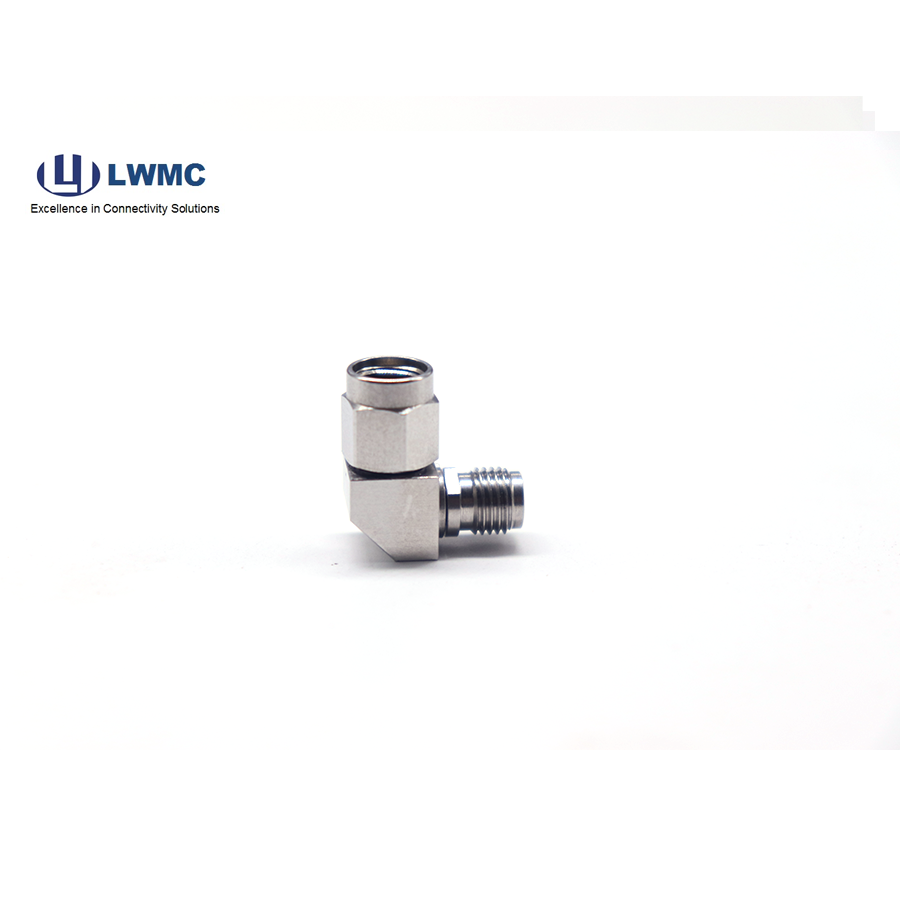
Impedance matching is not just a technical necessity in the radio frequency engineering domain, but it is the construct of all high-performance systems. When the characteristic impedance of the coaxial transmission line is constant, typically 50 or 75 Ohms, the electromagnetic fields are continuous across the transmission line with no discontinuity at the source and no discontinuous loading. However, when connector interface impedance mismatches occur, the signals rebound in to the source causing power drop, heat dissipation and corrupt data. Linkworld has over 20 years of experience in RF innovation, and we understand that the major factor in the difference between a reliable system and a problematic system is impedance matching. This paper discusses the importance of impedance matching, and why proper connector choice on design, construction and deployment will ensure signal integrity.
Understanding Characteristic Impedance and Reflections
The characteristic impedance of a coaxial transmission line is a variable that is sensitive to the physical geometry and the materials of the transmission line- i.e. inner diameter of the inner conductor compared to the inner diameter of the outer conductor and the dielectric constant of the insulating material between the two conductors.
When a signal is subject to a change in impedance either at a connector interface or a bend or a damaged cable, part of the signal will be reflected back to the source. These reflections cause standing waves on the transmission line resulting in a higher VSWR (Voltage Standing Wave Ratio). These digital system reflections cause bit errors and jitter. They can cause peaks of voltages that damage transmitter output stages in high-power analog systems. The RF connectors manufactured by Linkworld are machined to enable the uniformity in the geometry of the transition in the sense that the characteristic impedance between cable, connector, and component to component has a fixed value.
The 50 Ohm vs. 75 Ohm Distinction
The selection of the correct standard of impedance is one of the simplest decisions to undertake during system design. Even though most RF and microwave uses have converged at 50 Ohms, 75 Ohms is used in the broadcast and video distribution industry.
These two standards are incomparable. By simply connecting a 50 Ohm cable to a 75 Ohm input, one can achieve an immediate impedance disconnect and the VSWR will typically be approximately 1.5:1 half the impedance to cause severe signal distortion in delicate hermetically coupled systems. The different values between 50 and 75 Ohms represent a design trade-off: 50 Ohms is optimized to be able to operate with power and to have minimum loss. One of the few manufacturers of impedance variants in our product lines is Linkworld, differentiated clearly to prevent the possibilities of mismatch, and our engineering department can guide the customers on the choice of the standard to employ to use based on the particular requirement of the application.
Impact on Power Transfer and System Efficiency
When the source impedance, transmission line impedance and load impedance are equal to each other, peak power transfer is achieved. This is also a principle of design of RF systems which is a Maximum Power Transfer Theorem.
The reflected power does not simply vanish away in the wrongly matched systems but rather it heats the transmission elements. This heating can be highly important in high-power systems like broadcast transmitters or radar systems and can destroy connectors, cables and finally the transmitter itself. Better said, reflection of power is wasted energy, and this reduces the system performance. In battery operated or energy sensitive uses every decibel of loss due to mismatch directly impacts battery life. The connectors of Linkworld are designed to minimize such losses and the values imposed by control are set to deliver the maximum amount of power to the desired load and minimal reflections to waste.
Impedance Matching in Connector Assemblies and Transitions
The connector-to-cable interface is the most vulnerable location of impedance discontinuity. The connector that was perfectly designed would perform poorly when attached to a cable that is not designed to fit, terminated in a different way, etc.
Similarly, the back-end interface to which the cable braid will terminate into the connector body must be matched with appropriate diameters regarding the diameter. The reason is that factory terminated cable assemblies can typically perform reasonably well when compared to field terminated connections- they eliminate the variance that is produced by hand assembly. The manufacturing of the assemblies of the custom coaxial cables used at Linkworld is done under quality in controlled conditions and all ingredients of the assembly are selected in a manner to guarantee a uniform impedance at every transition. Everything we offer has the impedance-suited performance needed by mission-critical application: either you need the standard configurations or you need a tailored solution.
Impedance matching is not merely a theory problem, it is also a practical challenge of any RF system that must be able to provide power efficiently, to preserve the signal readable, and to be useful in the long run. From the fundamental choice between 50 and 75 Ohm standards or the precision of connector interfaces manufacture is, every aspect of connector design and selection influences the discontinuity of the impedance of the transmission path. Linkworld supplies the RF connectors, adapters and cable assemblies which preserve the same impedance through the concept-design-to-final-installation in over 20 years of RF production experience and engineering in our lines of products. Work with us to ensure RF systems are performing as they were created.