
 EN
EN
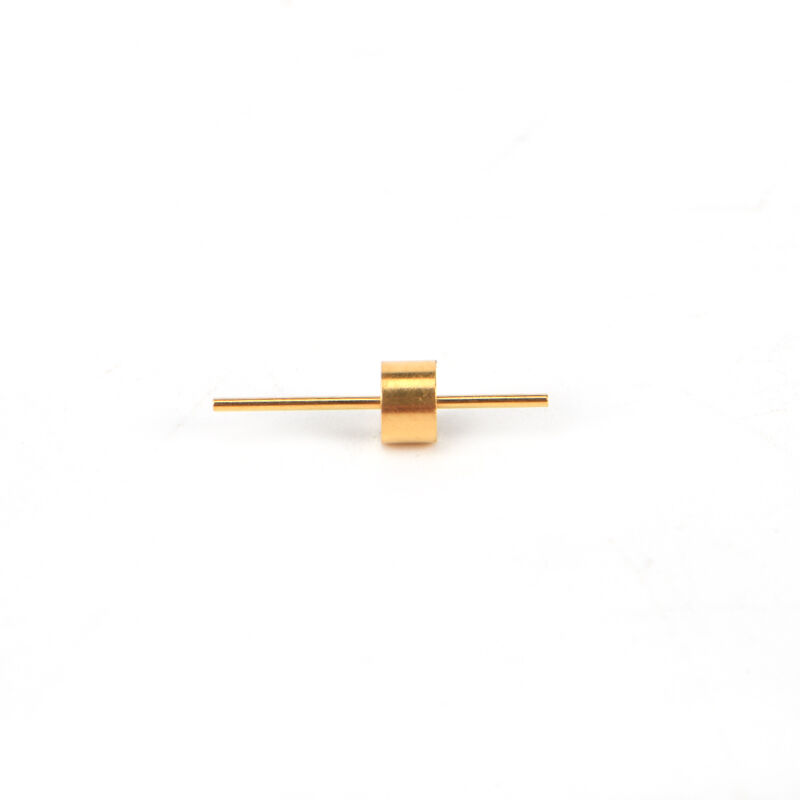
Capacity is king in the emerging 5G and the 6G networks. In high-order modulation, massive MIMO and dense frequency reuse, very clean signal environments are necessary. Passive Intermodulation (PIM) is, however, one of the most insidious opponents of capacity operating in the passive components. Signal interference due to the presence of multiple high-power carriers striking the non-linearities of connectors, cables or components raises the noise floor and degrades performance. The infrastructure that is important to high-capacity networks is low-PIM components. We are over 20 years of RF experience in the field of Engineering Microwave passive components with guaranteed low-PIM performance. This guide narrates 4 critical dimensions of low-PIM choice of components.
Understanding PIM and Its Impact on Network Capacity
This is where non-linear junctions terminate two or more high-power carriers and mix their frequencies to produce intermodulation products which can fall within receive bands. When the frequencies are close to each other, the third-order products are observed on the same band as the receive signal when there is a non-linear junction between the two coupled frequencies. Even though the power at a -153 dBc is only 5×10⁻¹⁶ of the carrier, the received signals are very weak, this apparently insignificant level of interference makes the noise floor too big to allow a good performance. Capacity effect: a comparison of capacity in the marginal and the maximum case will show a factor of up to 30% of capacity gain to high-traffic sites in 4x4 MIMO with PIM keeping below -160 dBc. The gain of PIM of one decibel simplifies an increase in the modulation orders and spectral efficiency.
Material Selection and Plating Systems
Material selection is critical for low-PIM performance. Ferromagnetic materials- iron, nickel, cobalt and should be eliminated entirely on the signal path are the key contributors to PIM. Base material in the case with connectors and housings can be produced of high conductivity, like the brass, or the copper, but plating systems are also needed. Conductive and environmental protection Tri-metal plating (copper, nickel and then either silver or gold) is applied in high-end components. The relationship between the quality of plating and PIM is extreme, that is, sufficient gold-over-nickel plating and torque management causes PIM to reduce by 15 dB compared with traditional designs. Surface quality: The problem of surface quality is microscopic- the skin depth of W-band is smaller than 0.2 μm means that lattice defects dominate intermodulation properties directly. Space grade components must have aluminum of purity of ≥99.9997% and surface roughness Ra ≤0.8 μm.
Advanced Connector and Interface Design
The connector interfaces are the most common source of PIM. The major physical process that leads to the development of PIM is nonlinear metallic contact nonlinearity brought about by non-ideal electrical contact. Modern low-PIM connectors overcome this in several aspects. 4.3-10 connectors have become the standard in the industry as the macro cell and high power DAS connector of interest with symmetrical contact interfaces that make sure that there are no micro-gaps throughout the circumference that would create PIM. The most difficult of these are contactless electromagnetic bandgap (EBG) designs in which PIM is achieved by using non-contacting interfaces because the nonlinearity caused by metallic contact is suppressed, and more than 20 dB average suppression is achieved (compared to conventional designs). Dielectrically filled waveguides have no contact surfaces and must be considered as an option in situations where very high standards are required in PIM.
System-Level Integration and Testing
It is not low PIM in the component level that is ensuring system performance. Last PIM is affected by the interaction between the elements and the environment. Proper torque is highly critical as it is very severe and loosening results in contacts leaving, while over-tightening leads to dielectric cracks, and contact deformation. An 8-10 in-lbs torque in the case of normal SMA connectors will reduce PIM up to 15 dB when compared with loose connections. Testing under real-world conditions would be required -PIM can change by +-6 dB when the assembly tolerances have varying values of the bolt torques within the range of 0.3 Nm. Challenges are worsened by thermal factors: silver-plated joints surface roughness increases from Ra0.3 μm to Ra1.2 μm in 2000 thermal cycles, and it boosts PIM 15 dB. The requirement to be up-to-date in the course of the years requires that the elements are futureproofed. Between 617 MHz and 5925 MHz components are ultra-wideband components which enable the network to be evolved without changing the infrastructure. Outdoor infrastructure is environmental and has low-PIM endings which have IP67 and 4.3-10 endings.
Wireless networks with high capacity are based on the utilization of low-PIM components. All this influences the performance of PIM that eventually determines the capacity of the networks since purity of materials and precision plating up to advanced connector design and rigorous testing. The decrease in PIM is even more significant with the arrival of 5G and the emergence of 6G. Linkworld is a manufacturer with over two decades of experience in RF components as well as considerable experience in low-PIM design that can be found in microwave passive components that are reliable in meeting the high capacity deployments. Contact us and discuss the requirements of the low-PIM components.