
 EN
EN
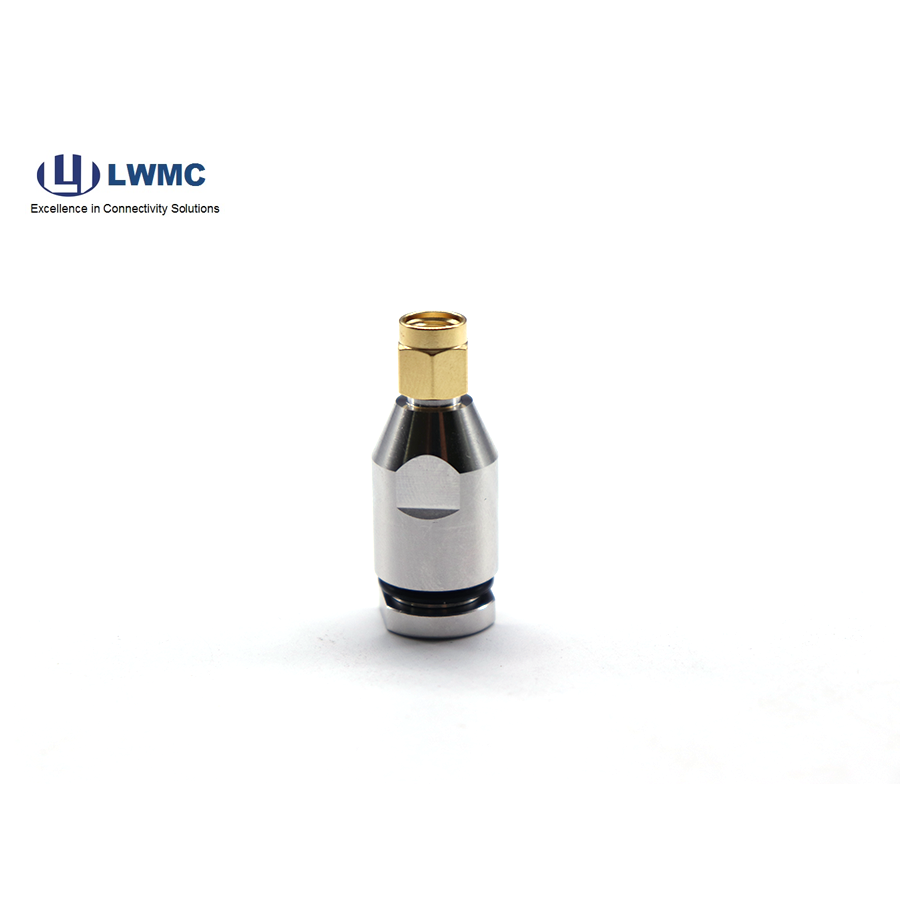
Among the fundamental decisions RF and microwave designers must make is the need to design in either a coaxial technology or a waveguide. This alternative will impact the performance, size, cost and frequency capability of the system. The coaxial cables are easy to use and are wider in frequency range where the waveguides are high efficiency at the high frequencies and power levels. At Linkworld, the company has over 20 years of RF knowledge and this will provide us with a chance to give unbiased advice regarding the two technologies. This guide will discuss four reasons why this decision should be made.
Frequency Range and Bandwidth
The frequency of use normally reflects the right technology. This broadbands coaxial components to their maximum frequency rating. Modern precision connectors with designs of 1.00 mm are can operate up to 110 GHz. The cutoff frequency of a coaxial cable however depends on the diameter; the larger the diameter of the coax is, the higher the mode order (i.e. 1/2 inch foam coax up to 9 GHz and 1-1/4 inch up to about 3.3 GHz).
Waveguides are band-limited structures which can only pass energy beyond a given cutoff frequency. Each size can sustain a band (e.g. WR-42 can sustain 18.0-26.5 GHz). At frequencies above 70 GHz, waveguide has always been used. Linkworld is helping customers with the selection of broadband coaxial and band-optimized waveguide according to their frequencies need.
Insertion Loss and Transmission Efficiency
At high frequencies, transmission loss will be strongly biased towards waveguide, especially on longer cables. Waveguides experience a much lower loss when compared to coaxial cables. Even a good quality coaxial cable is estimated to lose approximately 1 dB /m at 10 GHz, but above 60 GHz it exceeds 10 dB /m. At 60 GHz waveguides, the difference is as high as 200 times with 0.05 dB/m. This is because waveguides minimize the conductor loss (distribution on large walls) and effectively eliminate dielectric loss (propagation in air).
This is a difference which is significant in the point-to-point connections, where coax (7/8 inch) 2 GHz, the coax attenuation is 6.1 dB/100m, whereas with elliptical waveguide, the attenuation is 1.2 dB/100m. The assemblies of low-loss at Linkworld are developed to the minimum attenuation of frequency, distance and power budget.
Power Handling Capabilities
The management of power is also a significant point of difference particularly regarding radar and broadcasts. The waveguides are good due to their high power transmission capabilities owing to their strong structure and nonexistence of dielectrics that can be broken. Hollow metal building is better in thermal conductivity and voltage breakdown hazard because small separation of conductors in coaxial cables are eliminated.
Because coaxial components are essentially a restriction on the separation between conductors: arc resistance is restricted by the narrow distance between conductors (especially in high-altitude), the dielectric components are prone to failure under sustained high-Power conditions. Waveguide is the only possible option in the applications that require tens of kilowatts peak power or continuous wave power in the few-hundred watt region. Linkworld manufactures the two technologies to satisfy some power requirements.
Physical Integration and System Complexity
The move is usually driven by pragmatics. It is far easier and more flexible to use coaxial parts. They can be redirected around the obstacles, discontinued in the field with standard connectors, and mounted on PCBs. Coaxial interfaces provide high reconfiguring speed and their broadband nature simplifies inventory management.
Waveguide installation is a space-consuming. They weigh more, are larger and require intimate mechanical attention (consider wind loading of towers). Scrupulous adherence to minimum bend radii and extreme care to installation with reference to alignment of flanges and seal the moisture should be accorded. But it is waveguide that is out of comparison in short straight runs. In Linkworld, the assemblies of the custom assemblies are installed keeping in mind the installation.
The frequency coverage, loss, power handling and integration are the tradeoff between waveguide and coaxial. The coaxial technology is convenient and flexible in terms of broadband, which are appropriate in moderate frequencies and low power. Waveguide has superior loss properties and higher power density and is consequently applied in millimeter-wave frequencies and high-power systems. The selection of the most appropriate one will be helped by the team of specialists at the company, Linkworld, as they have been working in both technologies 20 years. Contact us about what you need.